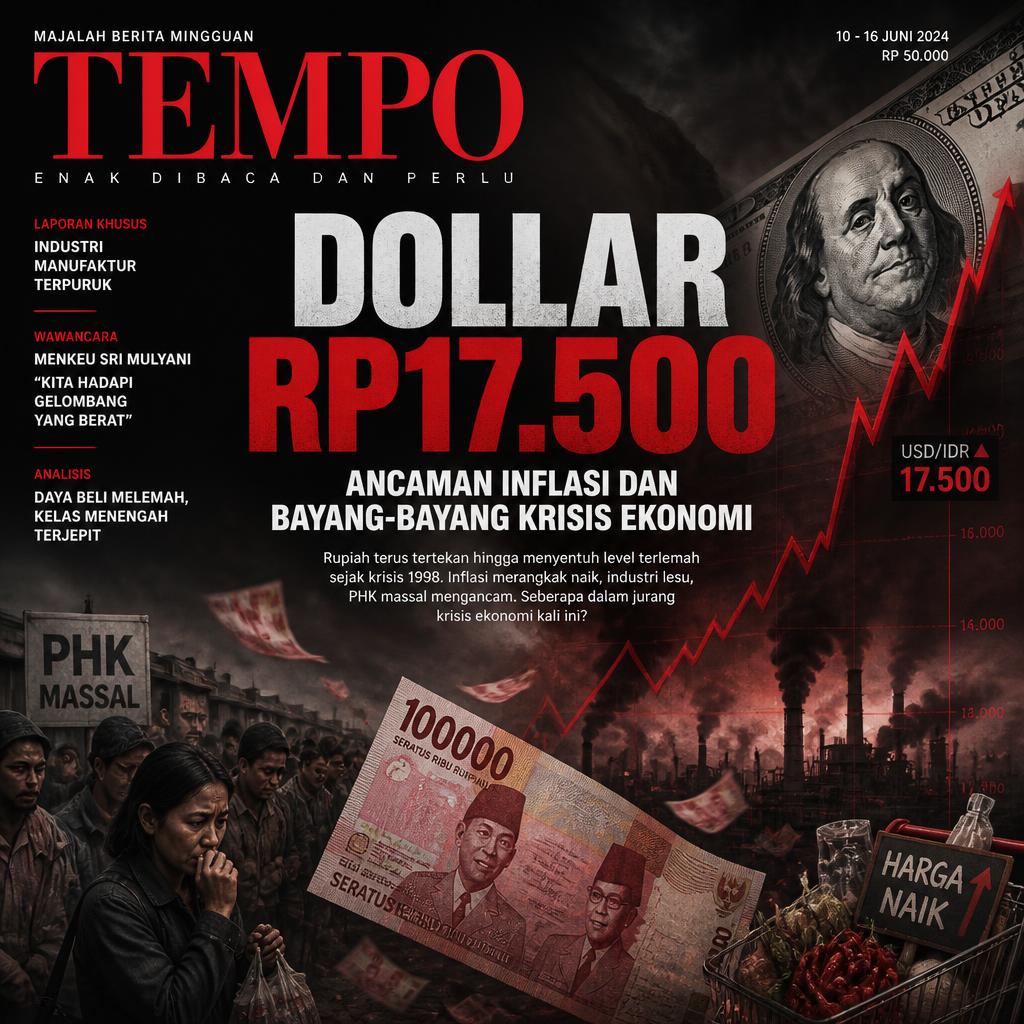
Dollar at Rp17,500: The Threat of Inflation and the Shadow of an Economic Crisis
By Dr. Abdul Wadud Nafis, Lc., MEI
The rise of the United States dollar exchange rate to Rp17,500 could have a major impact on a country’s economic condition, especially for countries that still rely heavily on imports and foreign debt, such as Indonesia. A stronger dollar is not merely an issue of exchange rates; it can also affect the prices of basic necessities, people’s purchasing power, business stability, and even national economic growth.
One of the most visible impacts of the rising dollar is increasing inflation. Inflation occurs when the prices of goods and services continue to rise over time. When the dollar reaches Rp17,500, the cost of importing goods from abroad becomes more expensive. Indonesia still imports many essential goods such as fuel, wheat, soybeans, medicines, medical equipment, industrial machinery, and electronic products. As a result, the prices of these goods in the domestic market also increase. The rise in import prices then spreads to various sectors of society.
In addition, companies’ production costs also increase because many industrial raw materials come from overseas. Companies facing higher production costs usually raise the selling prices of their products in order to maintain profits. This condition causes the prices of public necessities to become more expensive and reduces people’s purchasing power. If people’s incomes do not rise in line with increasing prices, public welfare will be negatively affected.
A high dollar exchange rate also impacts the foreign debts of both the government and private companies. Debt installments and interest payments denominated in dollars become larger when converted into rupiah. As a result, the state budget may become burdened, and companies with dollar-denominated debt risk facing financial difficulties. In worse situations, some companies may experience bankruptcy and carry out layoffs of their employees.
The small and medium enterprise sector is also affected. Many small businesses depend on imported raw materials or supporting goods from abroad. When raw material prices rise, business profits decline. If this condition continues for a long time, economic activity may slow down and unemployment rates may increase.
On the other hand, the rise of the dollar can actually provide benefits for exporters because Indonesian products become cheaper in international markets. However, these benefits are often not enough to offset the negative impacts experienced by society as a whole, especially if the economic structure still heavily depends on imports and domestic consumption.
If the high exchange rate condition persists for a long period without proper management, it could trigger an economic crisis. An economic crisis is characterized by weakening economic growth, high inflation, rising unemployment, declining investment, and decreasing public confidence in the national economy. The experience of the 1998 monetary crisis showed that the weakening of the rupiah could create severe social and economic consequences.
Therefore, the government and the central bank need to take strategic measures to maintain the stability of the rupiah exchange rate. Several measures that can be taken include strengthening foreign exchange reserves, increasing exports, reducing dependence on imports, maintaining political and economic stability, and strengthening domestic production sectors. Society also needs to cultivate a culture of frugality, avoid excessive consumption, and strengthen productive economic activities.
Ultimately, exchange rate stability is one of the important factors in maintaining a nation’s economic resilience. An excessively high dollar exchange rate can trigger inflation and increase the risk of an economic crisis if it is not anticipated through proper policies and cooperation among all elements of the nation.